
Pros
- Enables precise entry/exit timing by showing real supply/demand levels
- Helps estimate slippage before executing large orders
- Reveals support/resistance zones before they appear on charts
- Works on any major exchange interface (Binance, Kraken, Coinbase)
- Free to use—no premium tools required
Cons
- Requires active monitoring; order books update continuously and can mislead if stale
- Large orders may be hidden or spoofed, distorting true market depth
- Steep learning curve for interpreting depth without practice
- Over-reliance on order book alone ignores broader market context
Claim Exclusive Trading Bonuses
- 0% maker fees on top exchanges
- Up to 400x leverage
- No-KYC required
- Exclusive sign-up bonuses
Trusted by pro traders securing VIP fee tiers via Trading365
What You'll Learn in 2 Minutes
Reading an order book lets you see exactly where supply and demand meet in real time. You'll learn to interpret bid and ask prices, calculate the spread, and assess market depth—skills that help you time entries, estimate slippage, and spot potential support or resistance zones before they appear on a price chart.
Before You Start
Required: Access to any exchange trading interface (Binance, Kraken, Coinbase Advanced Trade, etc.)
Know this: The order book is a live, continuously updating list of all pending buy orders (bids) and sell orders (asks) for a trading pair. It shows what the market is willing to do *now*, not what it did in the past.
Key terms:
| Term | Meaning |
|---|---|
| Bid | Price a buyer is willing to pay |
| Ask | Price a seller will accept |
| Spread | Difference between lowest ask and highest bid |
| Depth | Total volume available at various price levels |
| Slippage | Price movement between order placement and execution |
---
Step-by-Step: Reading the Order Book
1. Locate the Order Book on Your Exchange
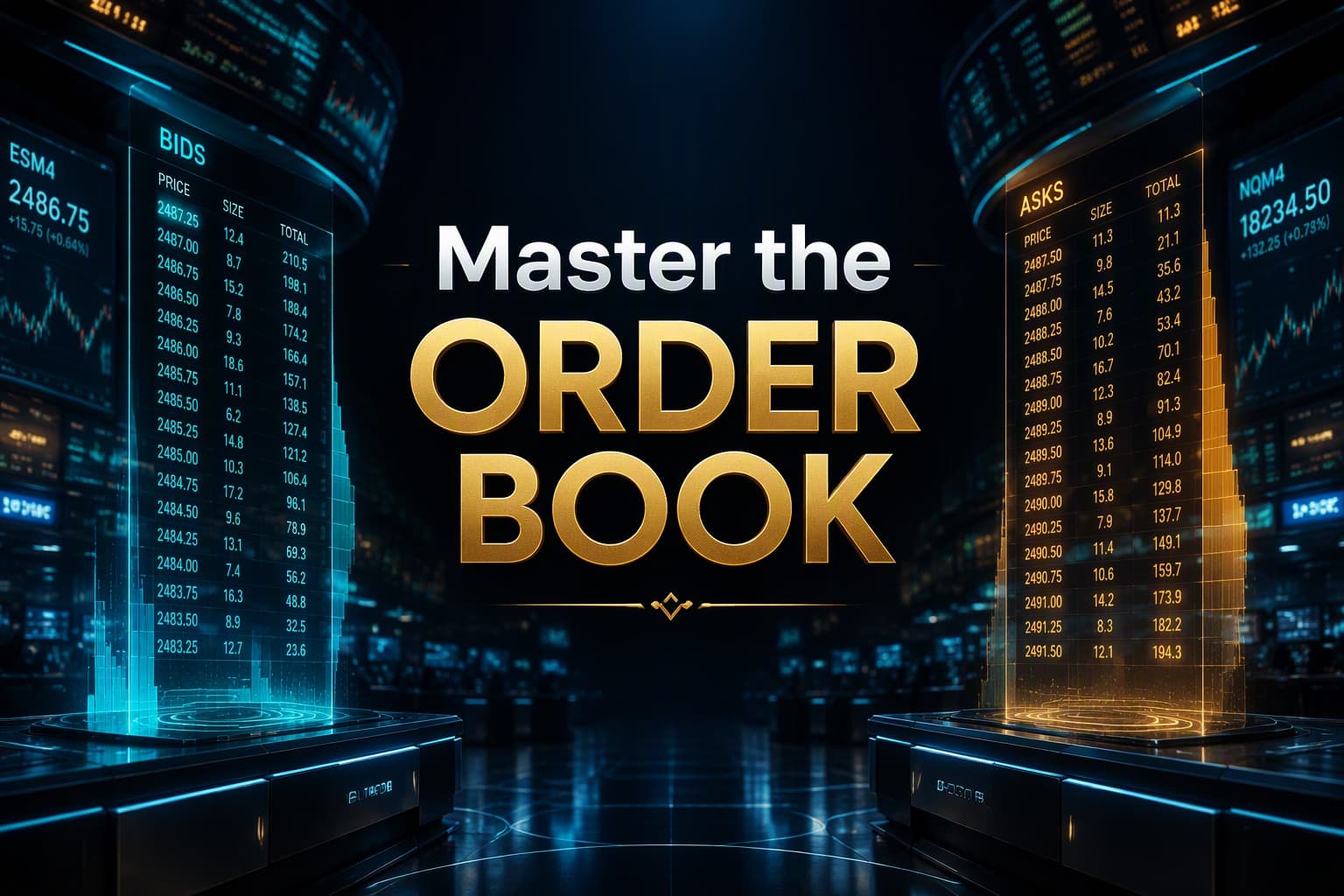
Find the order book panel—typically on the left or center of your trading screen. It's split into two color-coded columns: green for bids (buy orders) and red for asks (sell orders). Some platforms display only the price and total volume; others show individual order sizes or a cumulative depth view.
2. Read the Bid Side (Buy Orders)
The top bid is the highest price any buyer currently offers. This is the best price you could receive if you sold immediately using a market order. Prices descend downward from there, showing buyers willing to pay progressively less.
The volume beside each price represents total demand at that level. A large cluster of bids at a specific price suggests concentrated buying interest—a potential support zone where price might stall or bounce.
3. Read the Ask Side (Sell Orders)
The lowest ask (also called "best ask" or "offer") is the cheapest price any seller will accept. This is the best price you'd pay if you bought immediately with a market order. Prices ascend upward, showing sellers demanding progressively more.
Volume here represents supply waiting to be absorbed. Heavy ask concentration at a price level indicates resistance—selling pressure that could cap upward moves.
4. Calculate the Spread
Spread = Lowest Ask − Highest Bid
| Spread Size | What It Means |
|---|---|
| Tight (< 0.1% on major pairs) | High liquidity, efficient market, lower execution cost |
| Wide (> 0.5% or more) | Low liquidity, higher cost to trade, potential volatility |
On Binance or Kraken, BTC/USDT typically shows spreads of $0.01–$0.50 during active hours. A wide spread on an altcoin pair signals caution: even small orders may move the price against you.
5. Assess Depth (Order Book Walls)
Depth reveals how much capital sits on each side of the current price—and how easily price might move through it.
- Thin book: Small volume near the current price. A $5,000 market buy could push price up significantly. Slippage risk is high.
- Thick book: Large clustered orders create "walls." These act as speed bumps: price may struggle to move through them quickly.
Look for vertical volume spikes in the depth chart visualization—these are potential walls. However, walls can be genuine accumulation zones or spoofed orders placed to manipulate perception and canceled before execution. The U.S. Commodity Futures Trading Commission has documented spoofing as a persistent market manipulation tactic in electronic markets.
6. Watch the Order Flow (Time & Sales)
Cross-reference book changes with the time and sales feed (also called "recent trades" or "tape"). This shows actual executed transactions:
- Large market buys consistently hitting ask prices = aggressive buying pressure
- Large market sells hitting bid prices = aggressive selling pressure
If you see a thick ask wall at $50,000 but large market buys are steadily chewing through it, that level may break. Conversely, if a wall grows faster than it's being eaten, it may hold.
---
Tips & Common Mistakes
| Do This | Avoid This |
|---|---|
| Use depth chart visualization for pattern recognition | Staring at raw numbers only |
| Check multiple timeframes for wall persistence | Assuming all walls are real (spoofing exists) |
| Factor spread into profit calculations | Ignoring spread on low-volume pairs |
| Cross-reference with volume profile | Trading solely off order book without broader context |
Common mistake: Treating the order book as predictive. The order book is reactive—it shows current intent, not future certainty. A massive bid wall can vanish in milliseconds. Use it as one input among many, not a crystal ball.
Common mistake: Ignoring hidden and iceberg orders. Many exchanges and institutional traders use iceberg orders—only a small portion is visible, with more quantity revealed as earlier tranches fill. The visible book may understate true depth at key levels.
Stop the Fee Drain
High-volume traders are losing ~$2,000/mo on taker fees. Zero-fee structures exist — most traders just don't know how to access them.
Start Saving NowCommon mistake: Neglecting timing context. Order book dynamics shift dramatically around news events, funding rate settlements, or session opens (Asian, European, U.S.). A "normal" spread at 2 PM UTC may be dangerously wide at 2 AM.
---
Troubleshooting
| Problem | Cause | Fix |
|---|---|---|
| Prices jumping past your order | Slippage in thin market | Use limit orders; check depth before sizing; reduce order size |
| Walls disappearing before execution | Spoofing or order cancellation | Wait for sustained absorption; confirm with volume; use other indicators |
| Spread suddenly widening | Low liquidity period or news event | Pause trading; reassess risk; consider wider stops or smaller position |
| Order book looks "empty" | Viewing wrong pair or exchange downtime | Verify trading pair; check exchange status page; refresh connection |
| Bids/asks not matching your expected price | Last price vs. best bid/ask confusion | Remember: last traded price often differs from current best bid or ask |
---
Conclusion
Order book reading is a foundational skill that reveals the immediate mechanics of supply and demand. It helps you estimate execution costs, identify potential turning points, and avoid costly slippage in thin markets.
But it remains one tool in a broader toolkit. Combine order book analysis with volume trends, price action structure, and awareness of broader market context before making trading decisions. Practice reading the book on demo accounts or with small position sizes until the patterns become intuitive—speed of interpretation matters when markets move fast.
Ready to Act on the Research?
- 0% maker fees on top exchanges
- Up to 400x leverage
- No-KYC required
- Exclusive sign-up bonuses
Trusted by pro traders securing VIP fee tiers via Trading365
Frequently Asked Questions
What does the spread tell you in an order book?+
The spread is the gap between the highest bid and lowest ask. A tight spread signals high liquidity and efficient pricing, while a wide spread suggests thin volume and potentially higher costs for market orders.
How can I spot support and resistance from the order book?+
Look for large clusters of bid volume at specific prices—these indicate concentrated buying interest and potential support. Similarly, dense ask walls suggest resistance where price may struggle to rise.
Why is my market order executing at a different price than shown?+
This is slippage. If your order size exceeds the available volume at the best bid or ask, the exchange fills the remainder at worse prices deeper in the order book. Check cumulative depth before placing large orders.
Should I rely solely on the order book for trading decisions?+
No. The order book shows immediate supply and demand but lacks broader context like trend direction, news events, or hidden institutional activity. Combine it with chart analysis and risk management.
What's the difference between individual orders and cumulative depth view?+
Individual orders show exact sizes at each price level. Cumulative depth adds up all volume from the best price outward, helping you quickly gauge how much it would cost to move the market by a certain amount.
How do I reduce slippage when reading the order book?+
Use limit orders instead of market orders, break large trades into smaller chunks, and trade during high-volume periods when spreads are tighter and depth is deeper on both sides.
Related Articles
Best Crypto Exchange for Day Trading: Top Platforms Ranked for Speed, Fees & Liquidity
Day trading crypto demands tight spreads, fast execution, and reliable uptime—small inefficiencies compound into significant costs across hundreds of trades. Th

How to Withdraw From Binance: A Step-by-Step Guide for Crypto and Fiat
This guide shows you how to withdraw cryptocurrency or fiat currency from your Binance account to an external wallet, bank account, or another exchange. Crypto
Perpetual Futures Explained: How They Work, Funding Rates & Risks
Perpetual futures are cryptocurrency derivatives with no expiry date that let you bet on price direction with leverage, staying open indefinitely until you clos
💰 Stop Donating Profits to Exchanges
You've seen the math. High-volume traders save $2,000+ monthly just by choosing the right partner tiers. We've pre-negotiated exclusive bonuses, maker rebates, and VIP fast-tracks across the top 2026 exchanges.