
Pros
- Binance and OKX offer up to 125x leverage for amplified position sizing
- dYdX charges 0% maker fees, reducing costs for limit order strategies
- Bybit and OKX provide institutional-grade tools including TWAP and iceberg orders
- Kraken Pro maintains strong regulatory licensing and proof-of-reserves practices
- All five platforms support API access for automated execution systems
Cons
- Kraken Pro's 0.16%/0.26% fees are significantly higher than competitors for high-frequency trading
- dYdX's decentralized structure may pose regulatory uncertainty in evolving jurisdictions
- Binance faces ongoing regulatory scrutiny in multiple countries despite high volume
- Leverage up to 125x substantially increases liquidation risk during volatility spikes
Claim Exclusive Trading Bonuses
- 0% maker fees on top exchanges
- Up to 400x leverage
- No-KYC required
- Exclusive sign-up bonuses
Trusted by pro traders securing VIP fee tiers via Trading365
Best Crypto Exchange for Day Trading: Top Platforms Ranked
Day trading crypto demands tight spreads, fast execution, and reliable uptime—small inefficiencies compound into significant costs across hundreds of trades. The best platforms combine deep liquidity, low fees for high-frequency activity, and robust infrastructure that won't buckle during volatility spikes.
This guide ranks five exchanges that excel specifically for active intraday strategies, selected on measurable criteria rather than brand recognition alone.
---
How We Selected These Exchanges
Our evaluation prioritized factors that directly impact day trading profitability:
- Liquidity depth and order book quality: Tight bid-ask spreads on liquid pairs, minimal slippage on market orders up to $100K notional
- Fee structure for high-frequency trades: Competitive maker/taker rates, plus volume-tier discounts relevant to active traders
- Execution speed and uptime reliability: API latency, order matching engine performance, and historical stability during market stress
- Advanced charting and order types: Bracket orders, TWAP, iceberg, trailing stops, and portfolio margin capabilities
- Regulatory standing and fund security: Licensing, proof-of-reserves practices, and track record on fund protection
---
Quick Comparison
| Exchange | Maker Fee | Taker Fee | Max Leverage | Best For |
|---|---|---|---|---|
| Binance | 0.02% | 0.05% | 125x | Volume, altcoin variety |
| Bybit | 0.01% | 0.06% | 100x | Derivatives-focused traders |
| OKX | 0.02% | 0.05% | 125x | Institutional-grade tools |
| Kraken Pro | 0.16% | 0.26% | 5x | Security-first, regulated |
| dYdX | 0% | 0.05% | 20x | Decentralized, no KYC |
*Fees reflect standard tiers; lower rates available at higher volumes.*
---
1. Binance
What it is: The largest global exchange by reported trading volume, operating across spot, futures, and options markets with the deepest consolidated order books in crypto.
Who it's for: Traders needing minimal slippage on both major pairs and mid-cap altcoins, plus those who rely on automated strategies requiring diverse order types.
Standout: Binance's BTC/USDT and ETH/USDT perpetual futures typically maintain the tightest spreads industry-wide—often 0.01% or better during liquid hours. The platform offers the most comprehensive suite of execution tools: TWAP for large orders, iceberg to hide size, grid trading bots, and trailing stops with customizable callbacks. Its API documentation supports sub-100ms latency for co-located servers.
Caveat: Regulatory restrictions block access from the US, UK, Ontario (Canada), and several other jurisdictions. The interface complexity overwhelms newer traders, and the sheer feature density can slow navigation during fast markets. The exchange has faced regulatory enforcement actions from the CFTC and SEC regarding compliance practices.
---
2. Bybit
What it is: A Singapore-headquartered derivatives specialist built primarily for leveraged futures and perpetual contracts, with spot trading added more recently.
Who it's for: Leverage traders who prioritize platform stability when Bitcoin moves 10% in minutes and need unified margin across positions.
Standout: Bybit's matching engine has notably avoided the "overload" errors that plagued competitors during the March 2020 crash and May 2021 deleveraging events. Its unified margin account lets traders collateralize multiple positions without fragmented balances. The insurance fundVerified and auto-deleveraging mechanism provide transparent liquidation protections. Standard futures maker fees start at 0.01%—among the lowest for retail access.
Caveat: The spot market remains less developed, with fewer altcoin listings and thinner books than Binance. Traders focused on spot arbitrage or altcoin breadth will find limitations. The platform's regulatory licenses are fewer and narrower than some competitors.
---
3. OKX
What it is: A full-suite exchange originating from China (now globally distributed) with heavy investment in institutional tooling, API infrastructure, and Web3 wallet integration.
Who it's for: Traders managing multiple strategies across sub-accounts, those needing portfolio margin (cross-collateralization of spot and derivatives), and systematic traders with latency-sensitive bots.
Standout: OKX offers the most sophisticated risk management framework among retail-accessible platforms: portfolio margin mode calculates margin requirements across correlated positions, reducing capital inefficiency. API latency benchmarks compete with institutional venues, and sub-account structures allow strategy isolation with master-account oversight. Customizable liquidation preferences—partial versus full—give traders control over position unwinding.
Caveat: The feature density creates a steep learning curve; misconfiguring portfolio margin settings can amplify rather than reduce risk. User-reported support inconsistencies and regional availability gaps matter for traders needing reliable assistance.
---
4. Kraken Pro
What it is: The professional trading interface of Kraken, a US-regulated exchange operating since 2011 with bank-grade custody and regular proof-of-reserves audits.
Stop the Fee Drain
High-volume traders are losing ~$2,000/mo on taker fees. Zero-fee structures exist — most traders just don't know how to access them.
Start Saving NowWho it's for: Risk-averse traders in regulated jurisdictions, those with larger capital bases prioritizing fund safety over fee minimization, and entities requiring compliant on/off ramps.
Standout: Kraken holds the distinction of no successful hacks resulting in customer fund losses across its operational history—a rarity in crypto. Its proof-of-reserves system uses cryptographic verification of liabilities against held assets. Regulatory licenses include FinCEN registration in the US, FCA authorization for UK operations, and various European registrations. Fee schedules are fully transparent with no hidden spreads.
Caveat: Fees are substantially higher—0.16% maker / 0.26% taker at standard tiers versus sub-0.05% at competitors. Maximum leverage caps at 5x, limiting strategies dependent on larger position sizing. Advanced order types lag: no native TWAP, limited bracket order functionality, and less sophisticated algo execution.
---
5. dYdX
What it is: A decentralized perpetuals exchange operating on a StarkEx zk-rollup, settling trades on Ethereum with non-custodial fund management.
Who it's for: Privacy-focused traders, those avoiding centralized counterparty risk entirely, and developers building on composable infrastructure.
Standout: dYdX requires no KYC for basic trading—connect a wallet, deposit USDC, and trade. Funds remain in your control via smart contract custody rather than exchange wallets. All trades settle transparently on-chain with verifiable proof. The protocol has transitioned to its own Cosmos-based chain (dYdX Chain) for further decentralization of sequencer operations. Maker fees are zero, directly rewarding limit order provision.
Caveat: Liquidity is meaningfully lower than centralized alternatives—large orders face wider spreads and more slippage. Deposits and withdrawals incur Ethereum gas costs (or bridge fees to dYdX Chain), eroding profitability for smaller, frequent movements. Asset selection is limited to major cryptocurrencies; no exotic altcoins. The decentralized model means no customer support for frozen transactions or user errors.
---
How to Choose: Decision Framework
| Your Priority | Go With |
|---|---|
| Lowest fees + maximum liquidity | Binance |
| Reliability under volatility | Bybit |
| Advanced risk/portfolio tools | OKX |
| Regulatory protection | Kraken Pro |
| Self-custody + privacy | dYdX |
Verify before funding: Check fee tiers against your expected monthly volume, confirm withdrawal limits match your position sizing, and verify jurisdictional availability—many platforms geoblock based on residency, not just citizenship. Test execution with small size first: platform latency, UI responsiveness, and mobile reliability vary significantly by trading style and local internet infrastructure.
---
Bottom Line
For most day traders executing frequent, size-sensitive strategies, Binance or Bybit offer the optimal balance of cost efficiency and execution quality. Choose Kraken Pro when regulatory safety and fund protection outweigh marginal fee savings—particularly relevant for six-figure-plus accounts or institutional mandates. Select dYdX only if decentralization and self-custody are non-negotiable values, accepting the liquidity and support trade-offs.
Regardless of platform, start with reduced position sizes to validate execution quality under your specific conditions. The "best" exchange is the one that doesn't cost you money through slippage, downtime, or operational friction when it matters most.
Ready to Act on the Research?
- 0% maker fees on top exchanges
- Up to 400x leverage
- No-KYC required
- Exclusive sign-up bonuses
Trusted by pro traders securing VIP fee tiers via Trading365
Frequently Asked Questions
Which crypto exchange has the lowest fees for day trading?+
dYdX offers 0% maker fees, making it cheapest for limit-order strategies. For taker-heavy traders, Binance, OKX, and dYdX all charge 0.05%. Kraken Pro at 0.16%/0.26% is notably more expensive for high-frequency activity.
Is 125x leverage safe for crypto day trading?+
No—125x leverage is extremely risky. A 0.8% adverse move liquidates your position. It's suitable only for experienced traders with strict risk management, and most day traders use 5-20x or spot trading to survive normal volatility.
Do I need KYC to day trade crypto?+
dYdX requires no KYC due to its decentralized structure. Binance, Bybit, OKX, and Kraken Pro all require identity verification for full access, with Kraken maintaining the strictest regulatory compliance standards.
What order types matter most for day trading crypto?+
Bracket orders, trailing stops, TWAP, and iceberg orders are critical. Bybit and OKX offer the most comprehensive institutional-grade order types. These tools help manage execution across large positions and volatile conditions without manual intervention.
How important is API latency when choosing a day trading exchange?+
Very important. Sub-second delays cause slippage that compounds across hundreds of daily trades. Binance and Bybit generally lead on API performance, though actual latency varies by server location and code optimization.
Can I use Kraken Pro profitably despite higher fees?+
Yes, if you prioritize security and regulatory protection over cost minimization. Kraken Pro's 0.16%/0.26% fees work for lower-frequency strategies or larger position sizes where slippage matters more than per-trade costs.
Related Articles
What Is Prop Funding in Crypto? How It Works, Risks & Red Flags
A crypto prop firm is a company that sells trading challenges: traders pay upfront fees to prove their skills on simulated accounts, with a small percentage receiving profit-sharing "funded"…
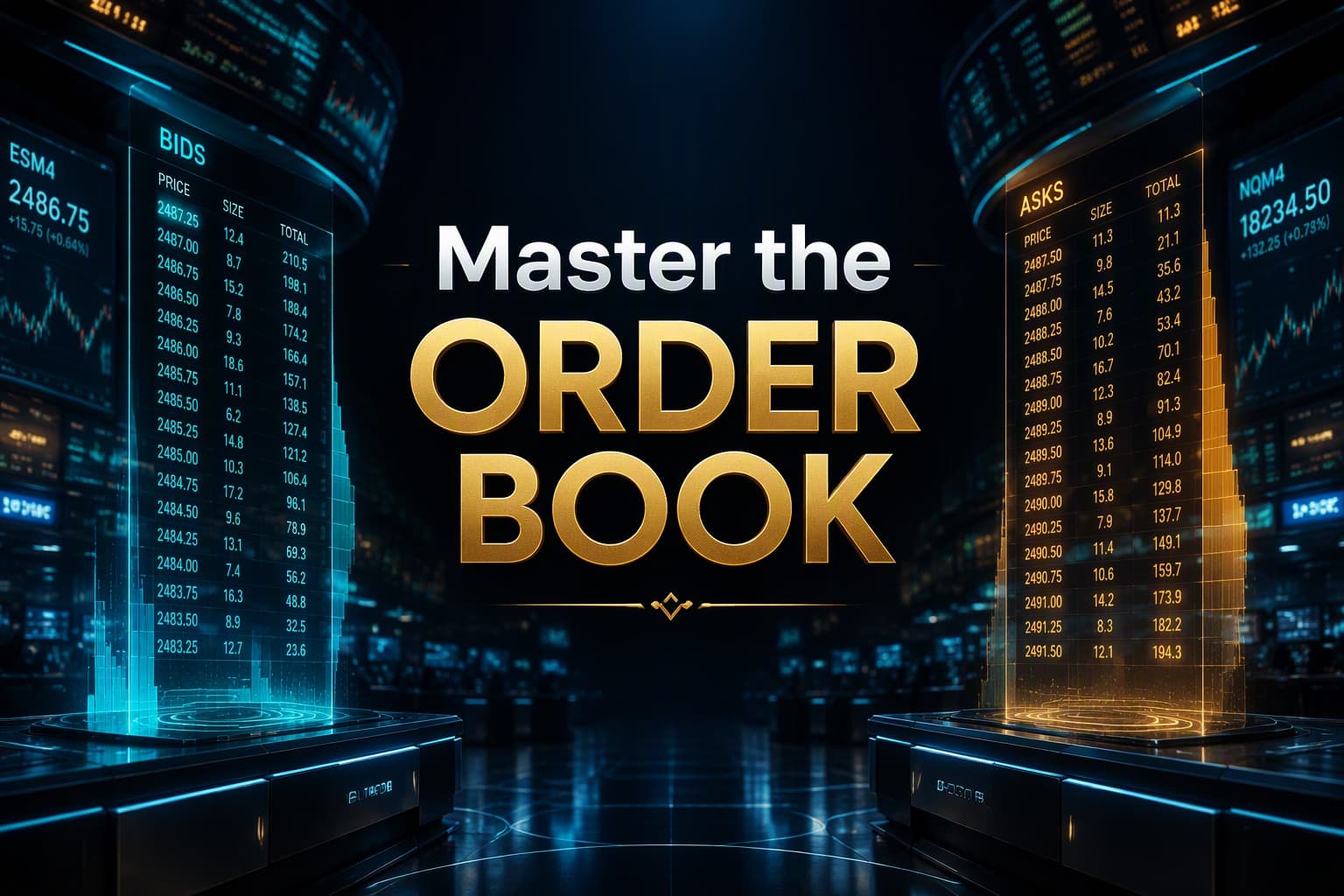
How to Read an Order Book: A Beginner's Guide to Crypto Market Depth
Reading an order book lets you see exactly where supply and demand meet in real time. You'll learn to interpret bid and ask prices, calculate the spread, and as
How to Withdraw From Binance: A Step-by-Step Guide for Crypto and Fiat
This guide shows you how to withdraw cryptocurrency or fiat currency from your Binance account to an external wallet, bank account, or another exchange. Crypto
💰 Stop Donating Profits to Exchanges
You've seen the math. High-volume traders save $2,000+ monthly just by choosing the right partner tiers. We've pre-negotiated exclusive bonuses, maker rebates, and VIP fast-tracks across the top 2026 exchanges.