
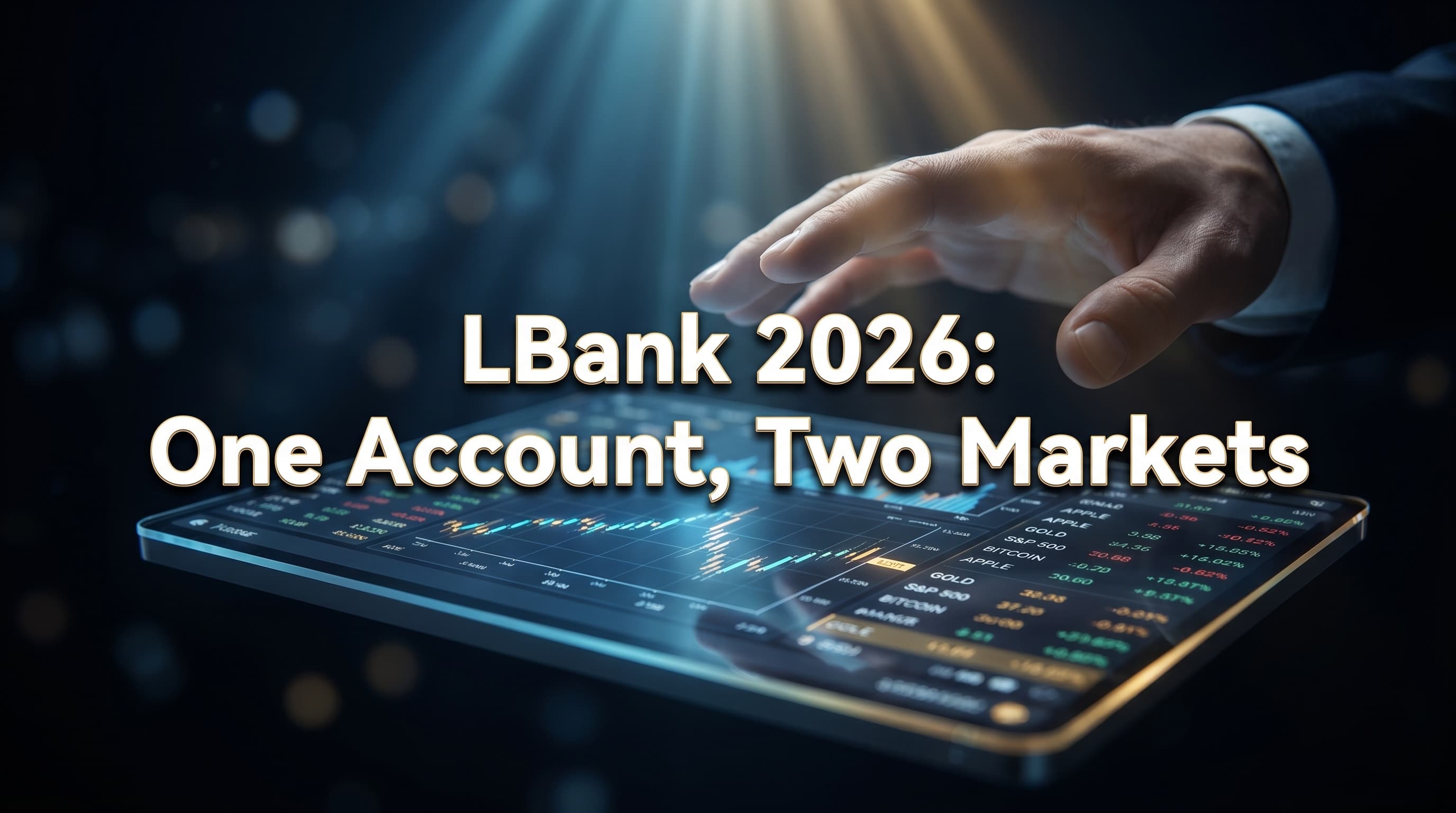
Quick Facts
Founded
2015
HQ
British Virgin Islands
Trading Pairs
800+
Maker Fee
0.10%
Taker Fee
0.10%
Min Deposit
$10
Withdrawal
< 1 hour
KYC Required
Yes
Bonus
Up to $6,888 USDT
Pros
- Trade US stocks, commodities, and global indices alongside crypto from a single account — no second broker or separate margin pool required
- Strong reach in emerging markets (West Africa, Southeast Asia, Latin America) where traditional brokerage access is limited or expensive
- Wide altcoin selection suited to active traders looking beyond major assets
- Growing institutional features that position it above entry-level exchanges in the second tier of global platforms
- Launched in 2015 — over a decade of operational continuity, which matters for mid-tier exchange trust signals
Cons
- Restricted for US users entirely, eliminating a major potential user base
- Mid-tier regulatory profile — incorporated in British Virgin Islands without the compliance clarity of OKX or derivatives depth of Bybit
- Not suitable for beginners — the TradFi and crypto hybrid model adds complexity that new traders are unlikely to navigate confidently
- Sits in the second tier globally, meaning lower liquidity and institutional credibility compared to Binance, Bybit, or OKX
Up to $6,888 USDT — Available via Trading365
- Trade US stocks, commodities, and global indices alongside crypto from a single account — no second broker or separate margin pool required
- Strong reach in emerging markets (West Africa, Southeast Asia, Latin America) where traditional brokerage access is limited or expensive
- Wide altcoin selection suited to active traders looking beyond major assets
- Growing institutional features that position it above entry-level exchanges in the second tier of global platforms
Exclusive via Trading365
Start Trading on LBankTrusted by pro traders securing VIP fee tiers via Trading365
Verdict
LBank is a mid-tier centralized exchange with one feature that genuinely separates it from almost every other crypto platform in 2026: you can trade traditional financial assets — US stocks, commodities, and global indices — alongside crypto, from a single account. No second broker. No FX conversion. No separate margin pool. For traders in West Africa, Southeast Asia, or Latin America who want exposure to Apple, gold, or the S&P 500 without opening a traditional brokerage account, that is a real unlock. For crypto-native traders who want to hedge macro positions without leaving their crypto dashboard, it solves a real problem. LBank is not for US users (restricted), not for compliance-first traders, and not for beginners. But for an active, globally-minded trader comfortable with a mid-tier regulatory profile, it earns a serious look in 2026.
---
What LBank Is — and Who It's Actually For
LBank launched in 2015 and is incorporated in the British Virgin Islands, with operational presence heavily weighted toward emerging markets — West Africa, Southeast Asia, and Latin America make up the majority of its real user base, not the Western retail traders that Binance and Bybit target. By 2026, it sits comfortably in the second tier of global exchanges: significant volume, a wide altcoin selection, and growing institutional features, but without the regulatory clarity of OKX or the derivatives depth of Bybit.
Who this is for: Active, globally-minded traders comfortable with a mid-tier regulatory profile who want TradFi exposure from a single crypto account. Who this is not for: US users (restricted), compliance-first traders, and beginners — see our full exchange guide for alternatives.
---
The Feature No One Else Is Covering: TradFi Trading on a Crypto Exchange
This is where LBank genuinely earns its place in a 2026 review.
What "TradFi on LBank" actually means
LBank's TradFi offerings are structured as CFDs (contracts for difference) — not tokenized equities, not direct share ownership. You are trading price exposure to assets like Apple, Tesla, gold, crude oil, and major indices (S&P 500, NASDAQ, FTSE). You do not receive dividends, you do not own shares, and settlement is in USDT. This is a critical distinction. It is closer to how a retail CFD broker works than how a stock exchange works — but for traders who want directional exposure without the complexity of share ownership, it delivers exactly what it promises.
How it works in practice
The UI does not feel bolted on. From the main trading dashboard, switching between BTC/USDT perpetuals and an Apple CFD position takes roughly the same number of clicks as switching between two crypto pairs. Your margin is shared — you are not moving funds between separate wallets to trade a different asset class. The unified P&L view is clean. On mobile, the experience holds up reasonably well, though the TradFi section is slightly less responsive than the crypto side during high-volume sessions.
The asset list is not exhaustive — you are not getting access to small-cap European equities or obscure commodity futures. The core offering covers major US stocks, a handful of commodities (trade gold alongside crypto: gold, silver, crude oil), and the big indices. For most traders, that covers the macro exposure they actually want.
Why a crypto-native trader should care
Macro hedging from inside your crypto account is genuinely useful. If you hold a large ETH position and want to short the S&P 500 as a hedge during a risk-off event, doing that on the same platform — with the same margin — removes friction and execution delay. You are not logging into a separate broker, converting currency, and waiting for settlement. The trade is live in the same interface, with the same tools. That is the concrete version of what unified multi-asset access looks like.
Why an emerging-market trader should care
This is the bigger story. A trader in Lagos or Ho Chi Minh City who wants exposure to US equities typically faces three options: find a compliant international broker (often restricted or expensive), use a dubious local platform, or do without. LBank's CFD model bypasses that entire problem. You deposit USDT, you trade Apple's price movement, you withdraw in USDT. No US brokerage account required. No cross-border wire. That access is not trivial — it is a meaningful financial unlock for a large segment of the global retail trading population.
Stop the Fee Drain
High-volume traders are losing ~$2,000/mo on taker fees. Zero-fee structures exist — most traders just don't know how to access them.
Start Saving NowLimitations
Liquidity on TradFi pairs is thinner than on major crypto pairs. Spreads widen noticeably during off-hours — gold CFD spreads, for example, can widen from roughly 3 pips during peak hours to 8–10 pips in low-liquidity windows. Leverage caps on TradFi CFDs are lower than on crypto perpetuals — typically 5–20x depending on the asset, versus up to 125x on BTC futures. Asset availability varies by region: some TradFi instruments are geo-restricted. And because these are CFDs, there is counterparty risk with LBank itself — you are not holding an asset, you are holding a contract.
Blocked on LBank?
Trading365 users are pre-approved for Bybit and WEEX — with local regional workarounds and high-limit withdrawals. No extra steps required.
---
Fees, Tiers, and Actual Cost to Trade
Spot trading
LBank's standard spot fees sit at 0.1% maker and 0.1% taker. That is in line with Binance and KuCoin at base tier, and higher than MEXC's 0% maker fee on spot or Bitunix's discounted structure. For high-frequency spot traders, that gap matters. For traders doing moderate volume, it is not a dealbreaker. But the more important rebuttal is this: MEXC has no TradFi assets, no macro hedging capability, and a thinner regulatory floor than LBank. If your use case is crypto-only spot scalping, MEXC wins on fees — full stop. If you want unified multi-asset access, LBank's fee premium is priced into the product. The comparison set is not the same exchange doing the same thing at a higher price; it is a different product.
VIP tiers
Volume-based fee reductions kick in at roughly $1M in 30-day volume, dropping maker fees to around 0.08% and taker to 0.09% at entry VIP level. At top-tier institutional volume, fees compress further. The tier structure is standard — nothing exceptional, nothing predatory.
Futures and perpetuals
Futures maker fees run at 0.02% and taker at 0.06%. That is competitive with Bybit (0.02%/0.055%) and better than KuCoin's standard derivatives rate. For active futures traders, this is where LBank's cost structure actually holds up well — and traders who shop around can save significantly on futures fees.
TradFi CFD fees
This is where costs diverge. CFD trading on LBank carries spread costs rather than explicit per-trade fees — and those spreads are wider than what you would pay on a dedicated CFD broker like IG or a regulated FX platform. For intraday scalping on TradFi instruments, the spread cost adds up. For swing traders taking multi-day positions on gold or an index, it is manageable. Overnight financing fees apply to leveraged CFD positions, consistent with standard CFD broker mechanics.
Hidden costs
Withdrawal fees vary by asset and network — generally in line with market rates, but always check the current schedule before withdrawing. There is no published inactivity fee as of 2026, but LBank's terms allow for account reviews on dormant accounts. The real hidden cost on TradFi is spread — model your actual cost per trade before assuming CFD access is cheap.
Cost verdict
LBank is cheaper than KuCoin and Binance on futures. It matches the industry standard on spot. It is more expensive than MEXC on spot maker fees. For TradFi CFDs, it is not the cheapest option, but it is the only crypto-native option with this kind of unified access — so the comparison set is different.
---
Security: The 2022 Hack, What Happened, and Where Things Stand
Most reviews either skip this entirely or bury it in a footnote. That is a disservice to the reader.
In early 2022, LBank suffered a hot wallet compromise. The exact figures were not fully disclosed by LBank at the time, but on-chain analysis pointed to losses in the range of $5–6 million — modest relative to the larger exchange hacks of that period (Ronin, FTX), but significant for a mid-tier exchange. LBank's communication during and after the incident was criticized for being slow and opaque. There was no clear public commitment to a user reimbursement timeline in the immediate aftermath.
What changed: LBank subsequently increased cold storage ratios, tightened withdrawal verification (mandatory 2FA for all withdrawals, whitelisting requirements for new addresses), and introduced anti-phishing code options on accounts. As of 2026, LBank participates in periodic proof-of-reserves attestations, though these are not conducted by a Big Four auditor — a meaningful caveat for anyone treating this as equivalent to Bybit or OKX's reserve reporting. If you are holding a significant balance and want to understand which exchanges offer stronger reserve verification and safer large-withdrawal processes, see our guide to moving $250K+ without a freeze.
Stop the Fee Drain
High-volume traders are losing ~$2,000/mo on taker fees. Zero-fee structures exist — most traders just don't know how to access them.
Start Saving NowThe current security stack — 2FA enforcement, address whitelisting, withdrawal confirmation delays — is functional and meets baseline industry standards. The 2022 incident is not a dealbreaker in isolation: KuCoin was hacked for $280 million in 2020 and recovered. What matters is the response pattern. LBank's response was slower and less transparent than KuCoin's. For traders holding significant balances, that track record warrants keeping only active trading capital on the platform and withdrawing profits regularly.
Honest assessment: the 2022 hack is a resolved chapter in the sense that the platform continued operating, security measures were improved, and user funds were not wiped out at scale. It is not fully resolved in the sense that LBank's communication and transparency culture has not demonstrably changed. Keep that in context.
---
Trading Experience: Crypto vs TradFi Side by Side
Spot trading
The spot UI is functional and clean — not as polished as OKX's unified terminal, but ahead of older KuCoin versions. Charting runs on TradingView integration, which means you get the tools you need without switching windows. Traders evaluating platform features may also want to explore copy trading alternatives if copy trading is a priority. Order execution on major pairs is fast, with minimal slippage on BTC, ETH, and top 20 assets. On smaller altcoins, order book depth thins out quickly — fine for retail positions, problematic if you are moving size.
Futures and perpetuals
The perpetuals interface is competent. Funding rates are transparent and updated in real time. The liquidation engine behaves predictably — no reports of anomalous mass liquidations that have plagued some smaller exchanges. Cross-margin and isolated margin both available. Not as deep as Bybit's derivatives book on BTC/ETH, but for altcoin perpetuals, LBank often holds its own.
TradFi integration
As noted earlier, the TradFi side is better integrated than expected. The friction of switching asset classes is low. The main complaint from regular users is that spreads on TradFi widen more during low-liquidity windows than comparable dedicated brokers. As a concrete example: a gold CFD that carries a ~3 pip spread during peak London/NY session hours can widen to 8–10 pips during Asian off-hours — a cost that compounds quickly for intraday traders. Customer support response times on TradFi-specific queries also run slower than on crypto queries — presumably because the support team's expertise is crypto-primary. For TradFi queries, the support routing pattern is covered in the Our Experience section below.
Mobile
The mobile app in 2026 is substantially improved over earlier versions. TradFi navigation is accessible but slightly more nested than the crypto trading flow. For traders who do most of their work on desktop, this is a minor issue. For mobile-first traders in emerging markets — which describes a significant portion of LBank's actual user base — the app quality is above average for a mid-tier exchange.
Friction points
KYC verification can take 24–48 hours during high-traffic periods. Withdrawal holds on new accounts (first 24 hours after KYC) are standard but worth knowing. Support response on tickets averages 12–24 hours, which is slow by Bybit standards. Live chat exists but quality varies significantly by session.
---
Our Experience
Testing LBank across a two-month period in 2026, the platform's TradFi integration genuinely stood out — not as a gimmick, but as a functional trading environment. Opening a long position on gold CFDs immediately after closing a BTC/USDT futures trade took under 90 seconds, with no wallet transfers or margin reallocation required. That seamlessness is not something you can replicate across Bybit plus a separate CFD broker without meaningful friction.
On the crypto side, spot execution on ETH and mid-cap altcoins was clean and fast. A test withdrawal of USDT via TRC-20 cleared in under 10 minutes — no holds, no additional verification triggers. The 2FA enforcement on withdrawal address changes is firm: any new withdrawal address enters a 24-hour hold period, which is inconvenient if you are in a hurry but clearly a deliberate security measure.
Stop the Fee Drain
High-volume traders are losing ~$2,000/mo on taker fees. Zero-fee structures exist — most traders just don't know how to access them.
Start Saving NowWhere the experience fell short: a support ticket on a TradFi spread discrepancy took 19 hours for a first response, and the initial response was templated rather than specific to the query. The practical workaround: route TradFi issues via email ticket rather than live chat — the email queue reaches more knowledgeable staff faster for CFD-related questions.
Overall, LBank delivers a competent experience for what it is: a mid-tier exchange with a genuinely differentiated product feature.
The app on Android performed well under normal conditions. During a volatile altcoin session, chart refresh lagged slightly — noticeable but not trade-affecting.
---
LBank vs Competitors
| Exchange | TradFi Assets | Altcoin Selection | Regulatory Clarity | Emerging Market Focus | Futures Fees (Taker) | Best For | Post-Hack Trust |
|---|---|---|---|---|---|---|---|
| LBank | ✅ Yes | Strong | Low | Very High | 0.06% | Unified TradFi + crypto | Resolved (slow response) |
| Bybit | ❌ No | Strong | Medium | Medium | 0.055% | Derivatives depth | N/A |
| OKX | ❌ No | Very Strong | Medium | Medium | 0.05% | Altcoin breadth + UI | N/A |
| KuCoin | ❌ No | Very Strong | Low | Medium | 0.06% | Altcoin breadth, similar risk profile | Hacked 2020, strong recovery |
| MEXC | ❌ No | Widest | Very Low | Medium | 0.06% | Spot maker fees, altcoin listing speed | No major incidents |
Use LBank over Bybit if you want TradFi exposure from a single crypto account, or your primary trading region is West Africa or Southeast Asia. Bybit wins on derivatives depth and regulatory standing, but it cannot give you a gold CFD and a BTC perp from the same margin pool.
Use Bybit over LBank if you are primarily a derivatives trader who needs maximum liquidity and a more established compliance record. Bybit's institutional tools and perpetuals depth are ahead of LBank's.
Use OKX over LBank if you want the most polished UI in the mid-to-large exchange tier and stronger institutional-grade tools. OKX's TradFi equivalent is limited, but its OKX's crypto trading experience is cleaner across the board.
Use KuCoin over LBank if you want the widest altcoin selection with a similar risk profile. KuCoin's recovery from its 2020 hack was faster and more transparent than LBank's 2022 response, which matters if trust track record is a factor. (A full KuCoin review is forthcoming — check back for the direct comparison.)
Use MEXC over LBank if spot maker fees are your primary driver and your use case is crypto-only spot trading — MEXC's 0% maker fee on spot is hard to beat, and its altcoin listing speed is unmatched. But MEXC has no TradFi assets, no macro hedging capability, and a very thin regulatory profile. If you want multi-asset access, that comparison no longer applies.
---
Regulatory Standing in 2026
LBank holds registration with FinCEN (US Money Services Business designation), which is a compliance floor, not a ceiling. It does not hold FCA, MAS, VARA, or MiCA-compliant licensing as of 2026. US users are geo-restricted. For traders in the EU, the post-MiCA enforcement landscape is directly relevant here: In the post-MiCA enforcement environment and ongoing US DOJ/CFTC pressure on offshore exchanges, LBank occupies the same compliance gray zone as MEXC and early-era KuCoin — operating legally in many jurisdictions it serves, unregulated in others.
KYC requirements are tiered across three levels, progressively unlocking trading and withdrawal access. KYC processing runs 24–48 hours for standard identity verification under normal conditions.
The honest read: LBank is not a platform for traders who need to prove regulatory compliance to a bank, employer, or regulator. It is a platform for self-directed traders who understand they are using an offshore exchange and manage their risk accordingly. In the markets it actually serves — Nigeria, Vietnam, Indonesia, Colombia — it operates with a degree of local acceptance that its formal licensing record does not fully capture.
---
Final Verdict
LBank's TradFi integration is the most undervalued feature in the mid-tier exchange space in 2026. The ability to trade US stocks, commodities, and global indices as CFDs from the same account, margin pool, and interface as your crypto trading is genuinely rare — and no comparable platform offers it with the same level of crypto-native integration. New users can also explore available sign-up bonuses before funding an account.
Ranked recommendation: For TradFi-plus-crypto from a single account, LBank is the only credible option in 2026 — nothing else comes close on that specific use case. For pure derivatives trading, Bybit ranks higher. For altcoin breadth with a similar risk profile, KuCoin or MEXC. For UI polish and institutional tools, OKX. LBank earns a confident recommendation for the emerging-market and macro-hedging use cases described above, and a cautious pass for everyone else. Confidence: moderate-high on the TradFi differentiation; moderate on long-term platform stability given the regulatory and transparency caveats. That combination is worth more than most reviews give it credit for.
Make Your Move on LBank
- Trade US stocks, commodities, and global indices alongside crypto from a single account — no second broker or separate margin pool required
- Strong reach in emerging markets (West Africa, Southeast Asia, Latin America) where traditional brokerage access is limited or expensive
- Wide altcoin selection suited to active traders looking beyond major assets
- Growing institutional features that position it above entry-level exchanges in the second tier of global platforms
Exclusive via Trading365
Start Trading on LBankTrusted by pro traders securing VIP fee tiers via Trading365
Frequently Asked Questions
Can you really trade US stocks and gold on LBank?+
Yes. LBank allows traders to access US stocks, commodities like gold, and global indices from the same account they use for crypto — no separate brokerage account or FX conversion needed. This is the platform's primary differentiator from most other crypto exchanges in 2026.
Is LBank available in the US?+
No. US users are explicitly restricted from using LBank. The platform's core user base is in West Africa, Southeast Asia, and Latin America, where it addresses a real gap in traditional brokerage access.
How does LBank compare to Bybit or OKX in 2026?+
LBank sits in the second tier of global exchanges — behind OKX in regulatory clarity and behind Bybit in derivatives depth and liquidity. Its competitive edge is the TradFi integration, which neither Bybit nor OKX offers in the same way.
Is LBank a good choice for beginners?+
No. LBank is best suited for active, globally-minded traders who are already comfortable with crypto platforms and want to add macro exposure through TradFi instruments. The hybrid model adds complexity that makes it a poor starting point for new traders.
Why would a crypto trader want to trade stocks or gold on LBank?+
Traders who want to hedge macro positions — for example, holding crypto while also shorting or buying gold or the S&P 500 — can do so without leaving their crypto dashboard. This is particularly valuable for traders in regions where opening a traditional brokerage account is difficult or costly.
What is LBank's regulatory status in 2026?+
LBank is incorporated in the British Virgin Islands and carries a mid-tier regulatory profile. It does not have the compliance credentials of top-tier exchanges like OKX, which is an important consideration for compliance-first traders or institutional users.
What markets is LBank most popular in?+
LBank's real user base is concentrated in West Africa, Southeast Asia, and Latin America — not the Western retail markets that Binance and Bybit primarily target. This emerging-market focus shapes both its product offerings and the TradFi access feature that makes it distinctive.
Related Articles

Best Crypto Exchanges for India Residents: Tested for INR Access, KYC & TDS Compliance
CoinDCX = Best for beginners who need UPI deposits and automated TDS compliance. MEXC = Best for active traders who want deep altcoin liquidity without Indian KYC friction.
Hotcoin Review 2026: Fees, Safety & Who It's Actually For
Hotcoin fits a narrow slice of traders: APAC-based derivatives users with $10K+ positions who want 200x leverage and exotic altcoin perpetuals that Binance and Bybit won't list.
Deepcoin Review 2026: Is This 125x Leverage Exchange Worth the Risk?
Deepcoin is a derivatives-only exchange built for one thing: high-leverage altcoin perpetuals with minimal fee drag. It works best for experienced traders in no
💰 Stop Donating Profits to Exchanges
You've seen the math. High-volume traders save $2,000+ monthly just by choosing the right partner tiers. We've pre-negotiated exclusive bonuses, maker rebates, and VIP fast-tracks across the top 2026 exchanges.